
Optical Bonding for Industrial HMI
From OCA to OCR/Silicone to Touch Lamination – for clear optics, robust assemblies, and reliable series production.
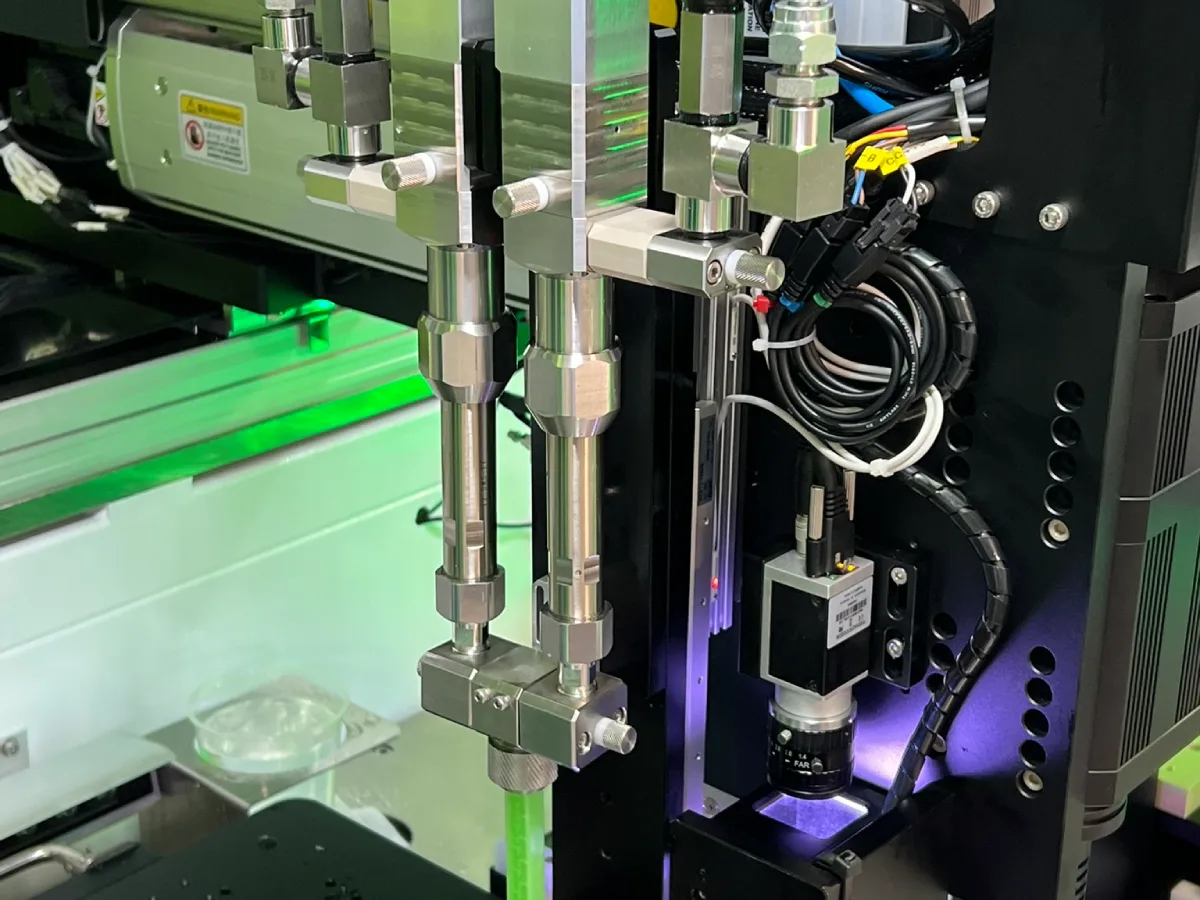
Optical Bonding & Touch Lamination – Manufacturing and quality assurance at BSE.
Overview
Optical bonding is the decisive quality factor for modern HMI systems: better readability in sunlight, higher contrast, fewer reflections – and at the same time a robust, industrial-grade module.
OCR (Optically Clear Resin)
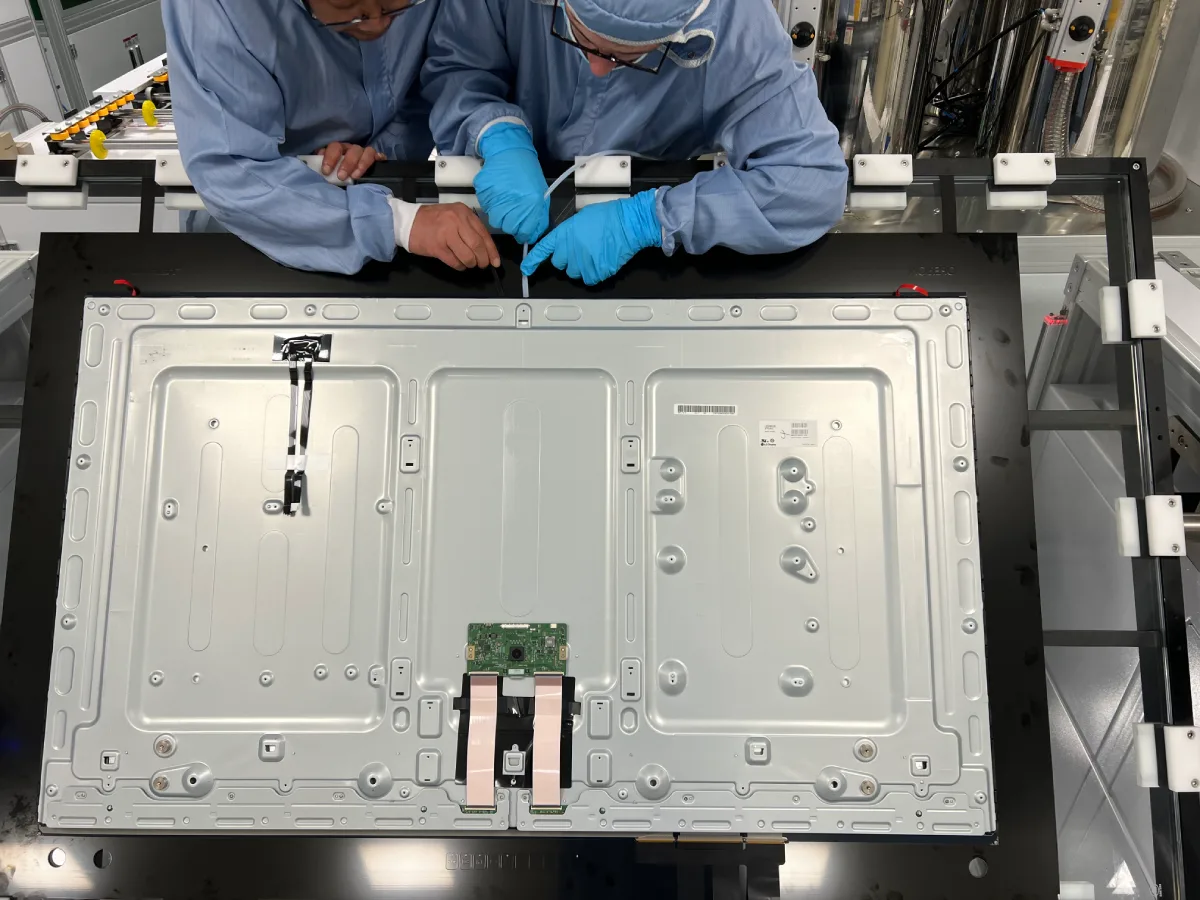
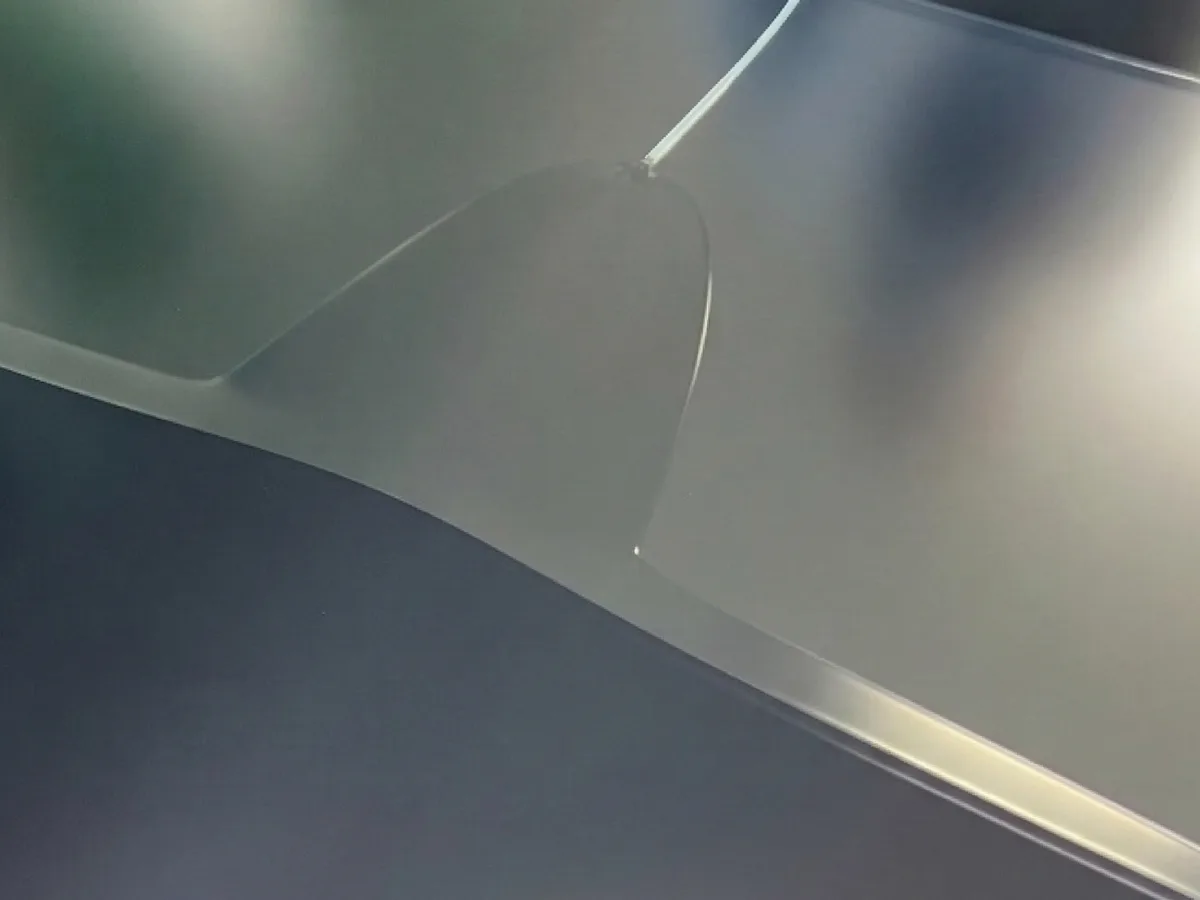
Our OCR process utilizes a liquid, transparent silicone material that is applied between the display and the front unit and then thermally cured. The 2K silicones used were specially developed for display applications – offering outstanding optical clarity, flexibility, and long-term stability.
Advantages of the OCR process:
- Perfect optical properties – even in direct sunlight or at oblique viewing angles
- Very good damping of vibrations and mechanical shocks
- No yellowing – even under UV/heat influence
- Reworkable (display replacement possible)
- Permanently elastic - extremely low stress, even with temperature changes
- Water-repellent - can be used without problems in environments with high humidity
- Thanks to low-viscosity, self-leveling material properties, the silicone ideally adapts to complex surfaces – effectively preventing bubbles and inclusions
Highly flexible application:
- Curved displays possible
- Two displays on one cover glass feasible
- Round or free display shapes easily implemented
- Size range: from 5" to 86"
OCA (Optically Clear Adhesive)
In this process, we use highly transparent adhesive films that are laminated between the display and the glass/touch unit in vacuum processes without air inclusions. The result: a durable, optically high-quality, and flat bond.
Advantages of the OCA process:
- Thin construction
- High optical purity
- Very efficient for flat displays and medium quantities
- Size range: from 5" to 31.5"
Touch Lamination
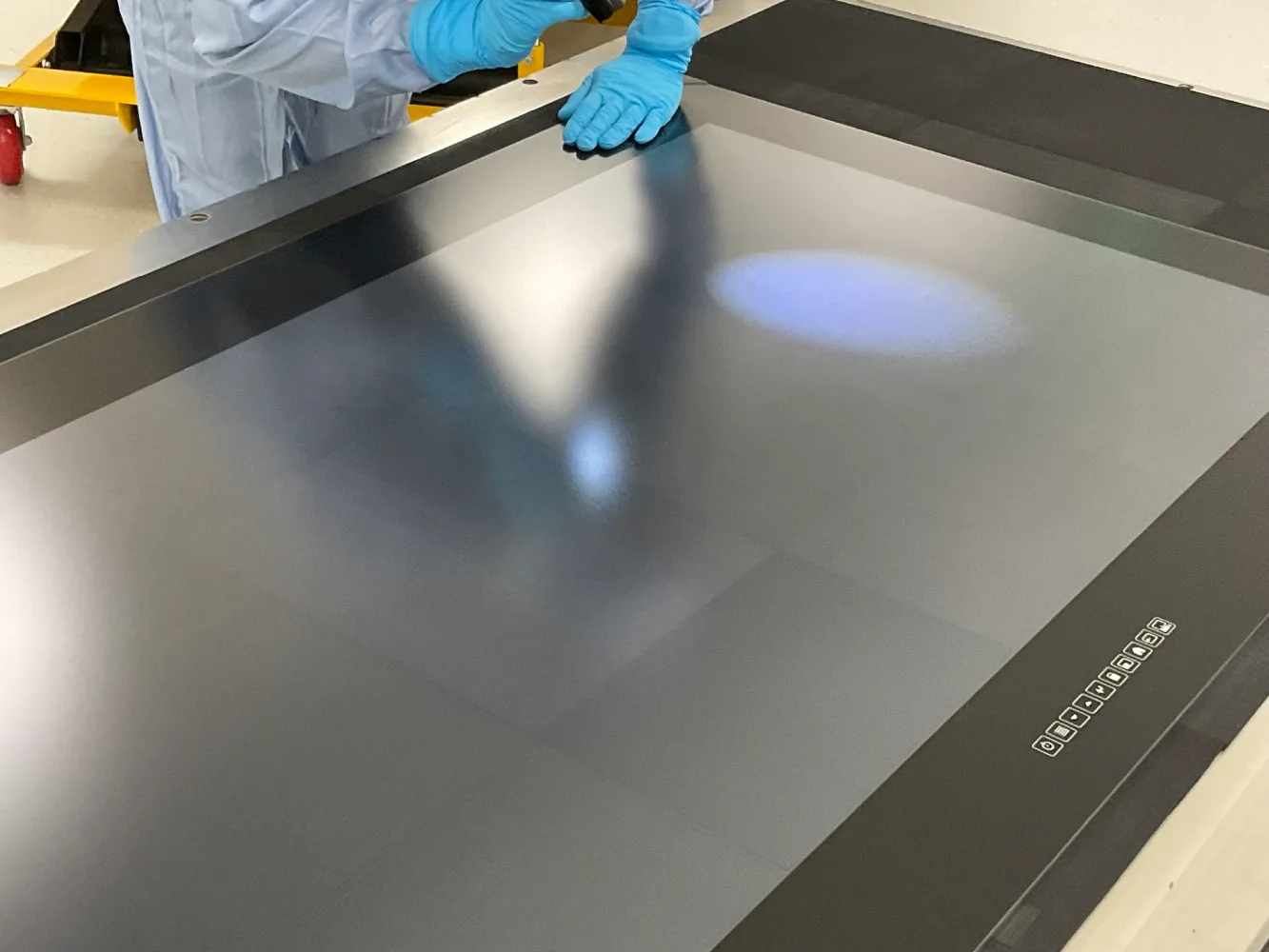
Touch lamination is a central process step for high-quality HMI systems. It connects glass, touch sensor, and display into an optically clear, stable, and durable unit.
Your Advantages
-
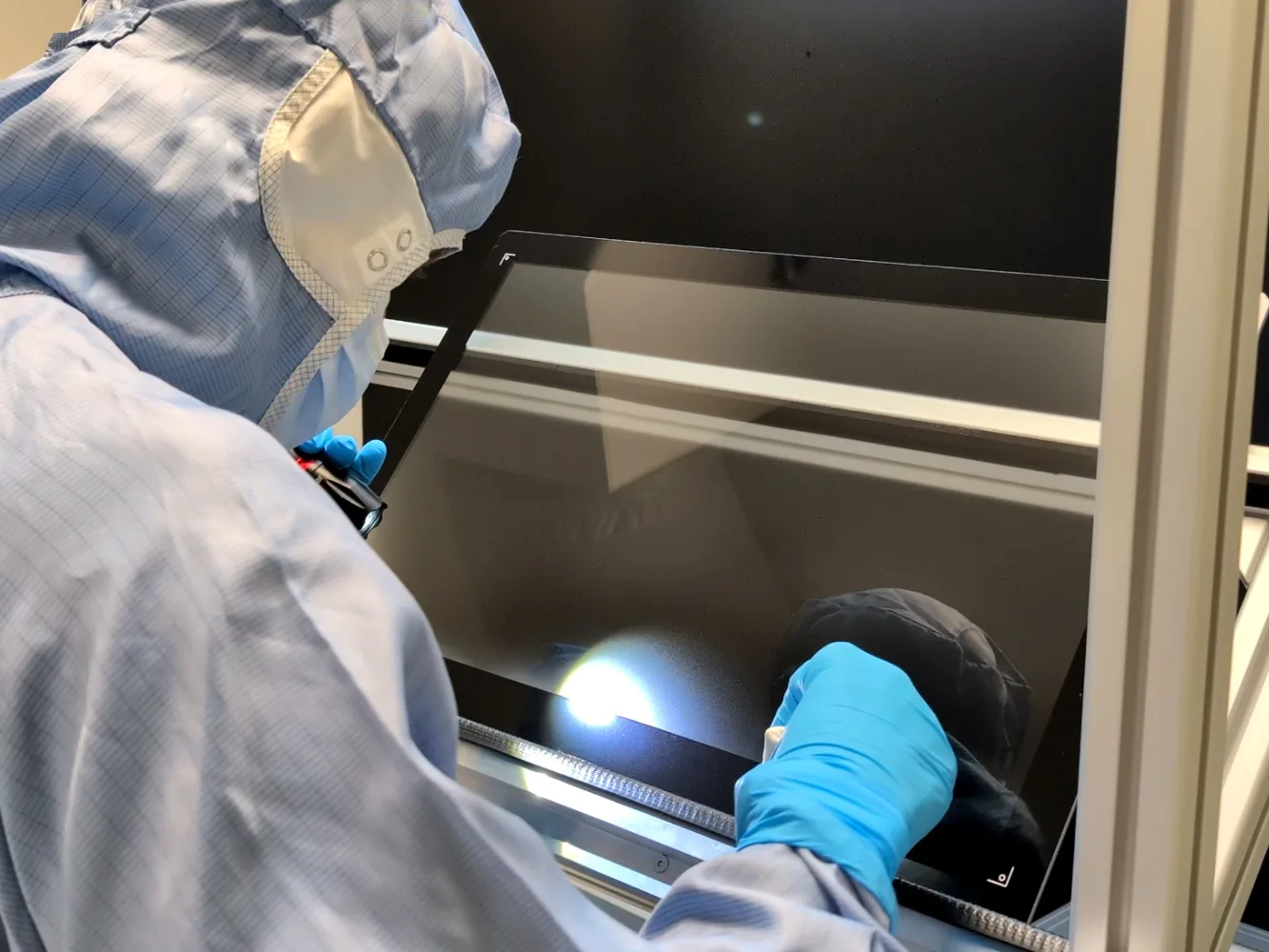
Cleanroom process according to ISO 14644-1 Class 7
Particle-free and process-reliable – for the highest optical demands. -
Flexible design implementation
Edge-to-edge, free forms, and functional films can be technically implemented without issues. -
Highest alignment accuracy
Camera-based alignment systems for precise positioning. -
Long-term stable & robust
Autoclaved laminations with high stability against temperature, humidity, and vibration. -
Scalable for your requirements
From small quantities to series production – short setup times, high flexibility.
Technical Parameters
- Laminatable sizes: 5″ to 75″
- Materials: Glass, ITO films, PET, Polycarbonate, functional films
- Alignment tolerance: typ. < ± 250 µm
- Process steps: Lamination & Autoclaving
- Manufacturing environment: ISO Class 7 cleanroom
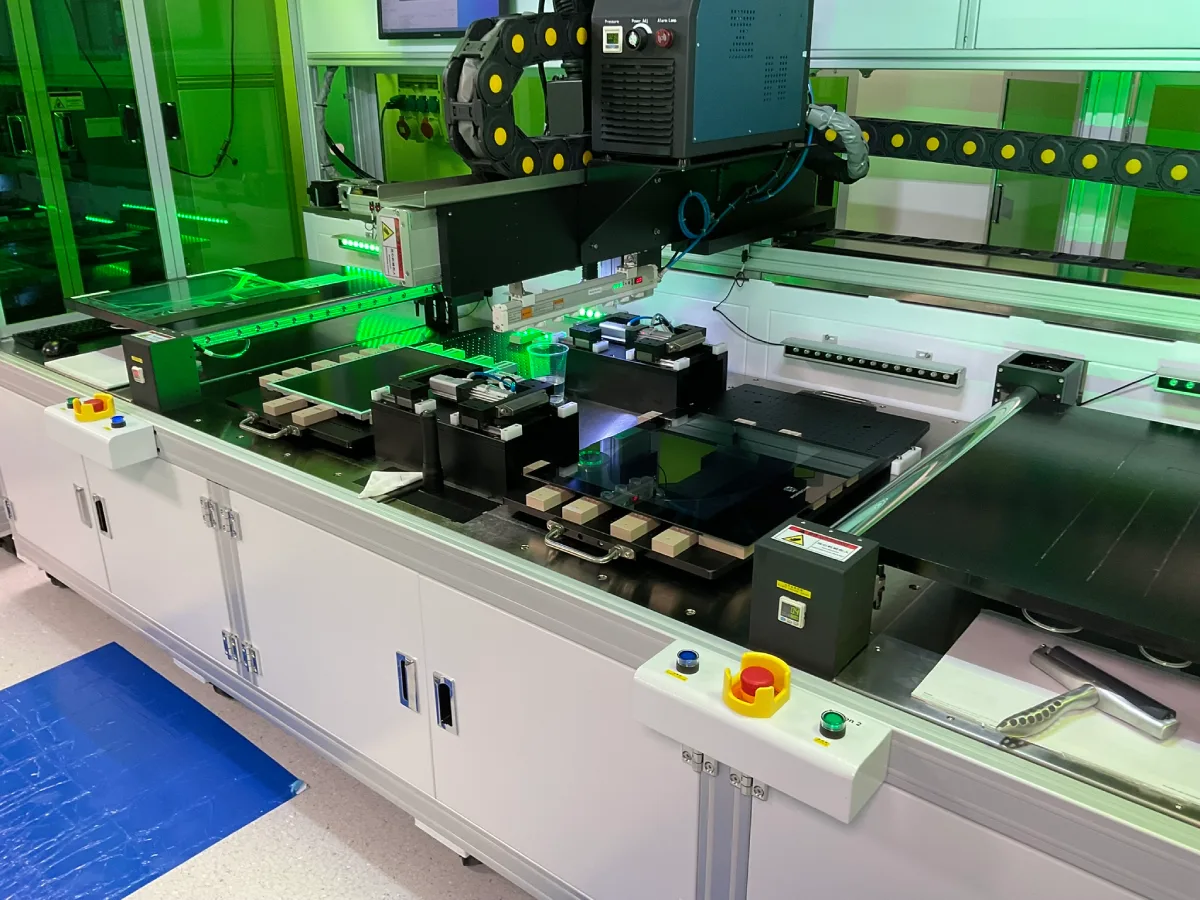
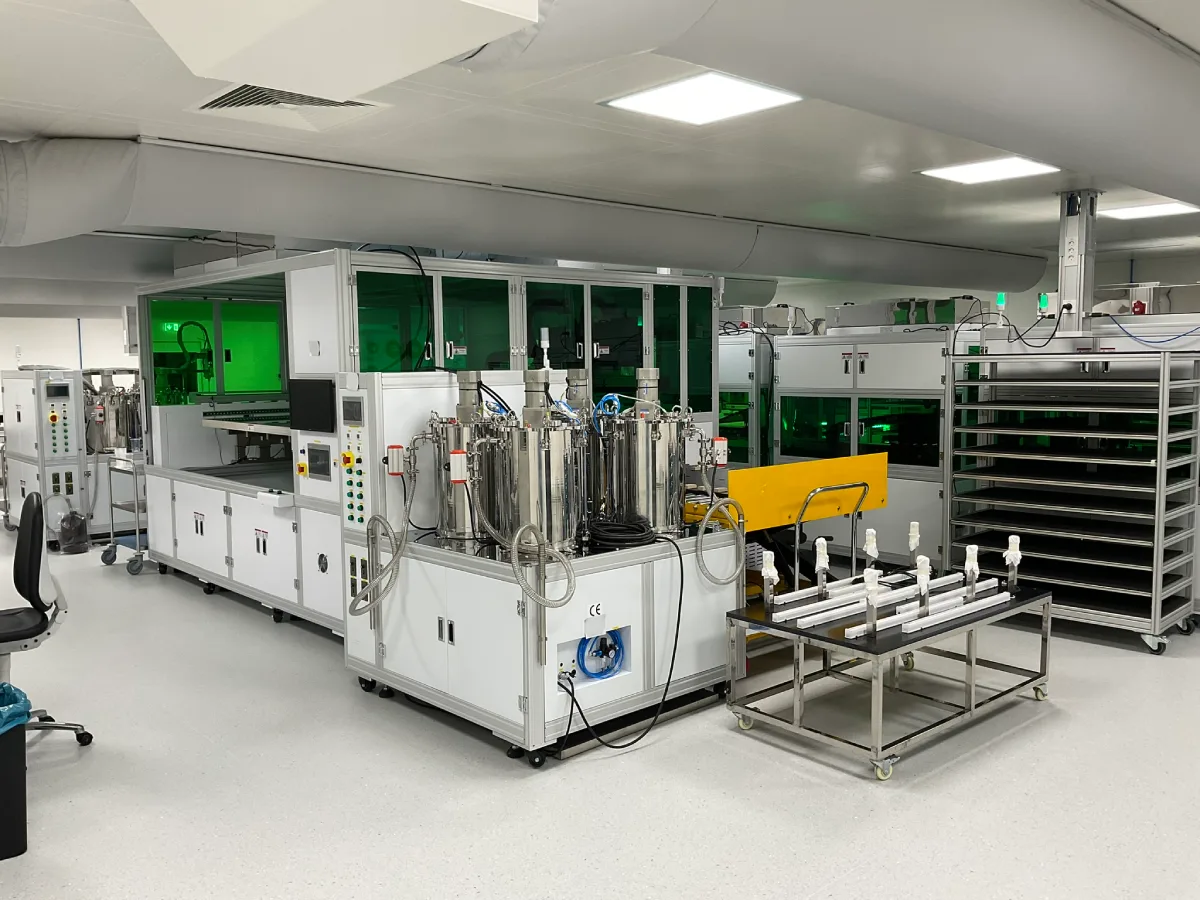
Insights into Cleanroom & Manufacturing
Submit Project Inquiry
Whether prototype or series production – we analyze your requirements and recommend the appropriate process for optical bonding, touch lamination, or display integration.
Send us your specifications, quantities, or operating environment – we will get back to you promptly with a proposal.